In Mathematics, we are committed to ensuring that children are knowledgeable, skilled and ready for the next phase of their education. We focus on procedural fluency alongside conceptual understanding to ensure that the children can continue to build new knowledge as they move through the next phase in their education.
Approach:
At North Mead, we follow the White Rose Maths scheme because it helps children build a deep understanding of maths step by step. The scheme focuses on developing strong number skills and problem-solving through practical activities and clear explanations. Lessons are carefully structured so that concepts are introduced gradually, allowing every child to grow in confidence. White Rose also encourages reasoning and discussion, helping pupils to explain their thinking and apply maths in real-life situations. We believe this approach gives children the best foundation for success in maths.
All children in Key Stage 1 also take part in the Mastering Number programme, developed by the Maths Hub. This programme is designed to strengthen children’s understanding of numbers and develop fluency. Through short, engaging sessions, pupils explore number patterns, use practical resources like rekenreks, counters and tens frames, and build confidence in mental calculation.
By focusing on number sense early on, the programme gives children the strong foundation they need for success in all areas of maths. It also supports reasoning and problem-solving, helping them to explain their thinking and apply their skills in different contexts.
We provide opportunities for children to develop their declarative facts, recall of number / multiplication / division facts through subscriptions to TT Rockstars and Numbots.
In the Early Years, we want children to develop a love of maths and a strong foundation for future learning. To support this, we use two complementary programmes:
Mastering Number (Maths Hub)
This programme helps our youngest learners build a deep understanding of numbers through fun, interactive sessions. Children explore patterns, counting, and number relationships using practical resources like counters and tens frames. These daily activities strengthen number sense and confidence.
White Rose Maths Curriculum
Alongside number work, we follow the White Rose scheme for other areas of maths, such as shape, space, and measure. Lessons are playful and hands-on, encouraging children to explore and talk about their ideas. This approach helps them make connections and see how maths is part of everyday life.
By combining these programmes, we give children the best start in maths—developing strong number skills while enjoying a broad and engaging curriculum.
Fast Finishers Maths
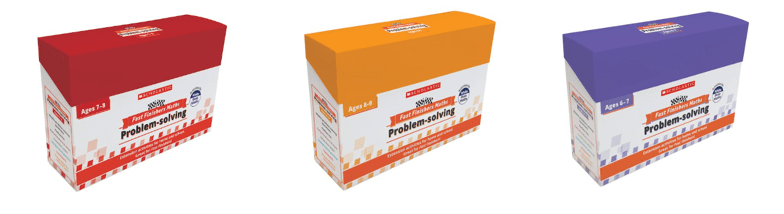
Pupils who grasp concepts rapidly are challenged through rich and sophisticated problems. Each year group uses Fast Finishers: White Rose Problem-solving. These problems further develop mastery of a variety of maths topics.
Assertive Mentoring
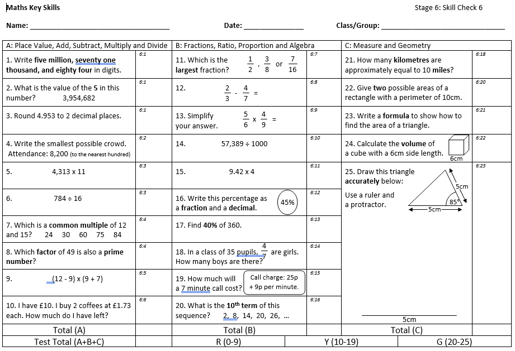
Alongside ‘White Rose’, children take ‘Assertive Mentoring’ skills checks. These help to identify what a child can do, and what they need to do to make progress. This helps to develop procedural fluency and enable concepts and knowledge to be stored in the long-term memory (know more, remember more). The low stakes testing element also supports progress.
Assertive Mentoring is used as an assessment
- to raise standards for all
- to motivate and involve children in their learning
During the Autumn Term, children at North Mead complete column 1 (number). During the Spring and Summer terms, children at North Mead complete all three columns of the skills check including column 2 (fractions and decimals) and column 3 (shape, space and measure).

TTRS and Numbots
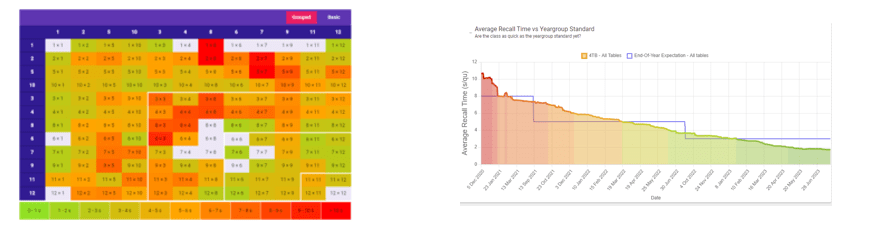
Times Tables Rock Stars (TTRS) is a carefully sequenced programme of daily times tables practice aimed at schools, families and tutors. It has successfully boosted times tables recall speed for millions of pupils around the world over, and this is true at North Mead Primary Academy. Teachers provide time for children to practice multiplication tables regularly in school, and children can also access their account at home. Teachers are able to use a variety of assessment tools and graphics to carefully set targeted multiplications for individual children to practice.
Impact
You may be aware that there is a new test for year 4 children called the “Multiplication Tables Check”. Here’s what you need to know:
We’re not worried. Under the national curriculum primary school children are expected to know their 12 times tables by the end of Year 4. So we’ve been preparing students to know their times tables by the end of Year 4 for quite some time now and are not concerned about the check at all.
The check itself:
- will take place in the summer term in June.
- is done online using a computer or tablet.
- can be done one student at a time, in groups or as a class.
- will take no longer than 5 minutes.
- will feature 25 questions and children will have 6 seconds to answer each question.
- There’s no problem solving or division just simple “3 x 4 = ?” type questions
The results are for the teachers. There is no pass or fail mark. The results of the test are not published publicly, they’re not going to end up on a league table and they’re not to be concerned about. The results are for us teachers to use so we can provide an even better education!
No Stress! I am sure that along with you, we do not want our students worried or stressed about the check. The Government has called it a “check” rather than a “test” or “exam” for a reason. We will endeavour not to draw students’ attention to the check so will be not be referencing in class unduly. Please be supportive of this approach and refrain from talking about the checks at home.
Practise at Home: Because maths is such a big subject, and we will of course continue to teach the full curriculum, we will need your continued support to help practise the times tables with your children. Some easy ways to do this include:
- Asking questions such as “What’s 7 x 8?”
- Reciting times tables by rote (4 times 1 is 4, 4 times 2 is 8, etc)
- Using apps and games such as TTRockstars and Numbots
- Singing times tables songs (there are loads online)
Why do we learn the times tables? In primary school, times tables knowledge is vital for quick mental maths calculations and problem solving, as well as for many of the topics children learn in years 5 and 6 (division, fractions, percentages).
Maths Web links

Times Tables Rock Stars (ttrockstars.com)

Subject Leader – Helen Hopfl
 Together We Make A Positive Difference